What is TB and how is it transmitted?
Tuberculosis (TB) is a chronic, primarily respiratory infectious disease of mammals caused by a group of closely related bacteria known as the Mycobacterium tuberculosis (MTB) complex. This group includes:
- M. bovis – responsible for TB in cattle (bovine TB) and other mammals, including occasionally people. Cattle are the natural host of M. bovis, but nearly all warm-blooded animals, including goats, deer, pigs, camelids, sheep, cats and badgers are susceptible to the infection. This broad range of animal hosts complicates the eradication of bovine TB.
- M. tuberculosis – the primary cause of TB in people, which rarely causes disease in animals.
- M. caprae – an additional causative agent of TB in wild deer in continental Europe.
This guidance is mainly concerned with TB in deer caused by M. bovis and all further references to ‘TB’ denote the disease resulting from infection with M. bovis. Deer are susceptible to M. bovis infection and can develop lesions and clinical signs of TB. In Great Britain (GB) deer are generally regarded as spillover hosts. This means they can become infected only when the challenge level is relatively high, and they do not usually sustain the infection within their own populations in the absence of infected cattle or a wildlife reservoir.
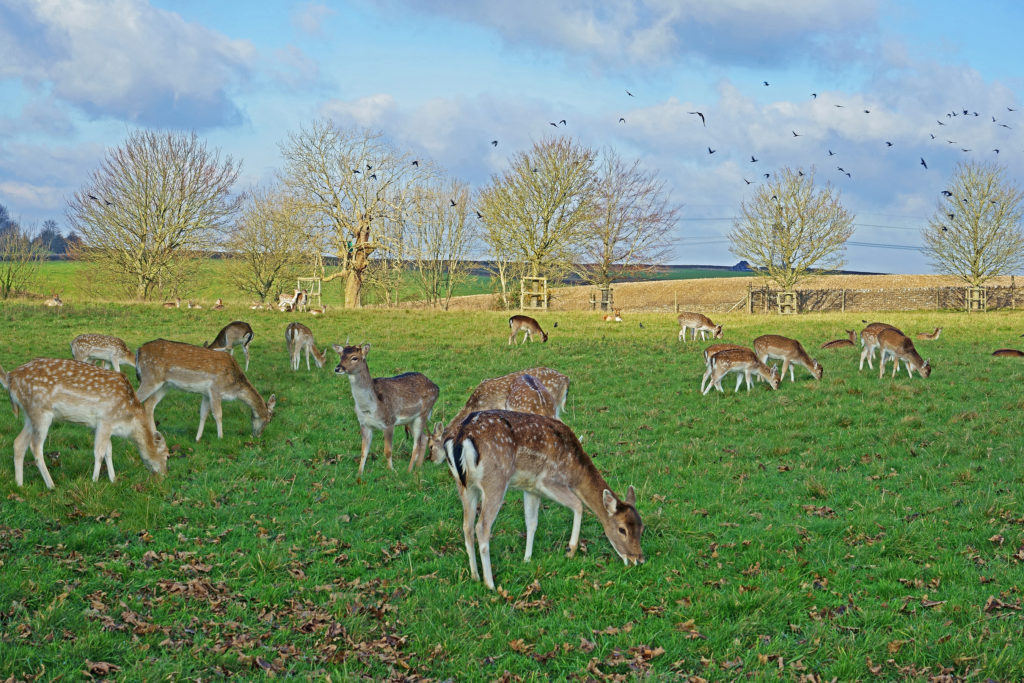
TB incidents in captive deer herds (i.e. involving enclosed groups of deer kept under different degrees of human management on farms or on public or private parks) in GB are infrequent. Nonetheless, M. bovis infection can spread to captive deer herds either directly (animal to animal) or indirectly via materials contaminated with the secretions or excretions of infectious animals. This can include contact with:
- infected cattle and other domestic animals (e.g. sheep, goats, camelids)
- wildlife reservoirs of infection (e.g. badgers and, potentially, wild deer)
- contaminated, pasture, equipment, feedstuffs, water and slurry
- deer with subclinical, undetected M. bovis infection that are unwittingly brought onto a deer farm or park, e.g. for breeding purposes or restocking.
A small number of laboratory-confirmed incidents of TB are reported every year in captive deer herds in GB, although unlike bovines (i.e. cattle, farmed water buffalo and farmed bison) there is no routine TB testing programme for captive deer. Official statistics relating to TB in farmed and park deer (and other non-bovine livestock species) in GB are published on GOV.UK.
Infection with M. bovis in deer is also a zoonosis, meaning that it can be naturally transmitted from vertebrate animals to humans, although the risk of deer-to-human transmission of M. bovis is considered to be very low, with no cases ever documented in GB so far.
Captive deer
For disease control purposes, ‘deer’ are defined in domestic TB legislation as deer of any species that are managed by a keeper, including those managed on enclosed park land. Farmed deer are captive (usually red) deer that are commercially bred and reared for venison production and, as a result, tend to be more closely managed and subject to more frequent handling by their owners/keepers than park deer. In GB, captive deer must be identified if they are to be tested for TB or leave the holding of origin. In England, the identification tag must show both the Defra or the British Deer Farms and Parks Association (BDFPA) herd registration number and the animal’s own unique number.
Signs of TB in deer
M. bovis infection is usually chronic (slowly progressing), insidious and, because its clinical signs are not specific, it cannot be diagnosed in deer by clinical examination alone. There is no routine surveillance TB testing of captive deer herds in GB. Therefore, incidents of TB in captive deer may initially detected through post-mortem surveillance, i.e. by identification of suspicious lesions of TB in deer carcases during post-mortem meat inspection in the slaughterhouse, or post-mortem examination in a veterinary diagnostic laboratory.
Actions when M. bovis is suspected in captive deer
TB in deer is a notifiable disease in GB, which means there is a legal obligation to report suspicion of disease. In England and Scotland, if, following a clinical or post-mortem inspection or examination, a live captive deer or carcase is suspected to be infected with TB, the Animal and Plant Health Agency (APHA) must be notified without delay by the person who has raised the suspicion.
In Wales, TB is only notifiable in a deer carcase or following identification of M. bovis by laboratory examination of samples taken from the animal.
APHA will then place movement restrictions on the whole deer herd, or part of the herd, by serving a legal notice on the keeper known as ‘TD02’ or ‘TN02’. In England and Wales, additional movement restrictions may also be applied on other TB susceptible species present on the holding. In all cases, movement restrictions will remain in place until APHA is satisfied that the suspicion of TB has been negated or that all TB infected animals have been identified and removed from the affected herd.
PCR testing of suspect TB lesions in captive deer carcases
APHA routinely uses polymerase chain reaction (PCR) testing on tissue samples collected at post-mortem inspection as the primary test to confirm or negate suspicion of M. bovis infection in deer carcases.
The PCR test reduces the time taken by the APHA laboratory to confirm whether M. bovis is present in tissue samples (when compared to the time taken to culture tissue samples). This means that in certain situations (i.e. slaughterhouse cases), if PCR test results are negative and check testing of the herd has been completed with negative results (where required), APHA can lift herd movement restrictions sooner than when previous laboratory protocols based on bacteriological culture were in use (which typically took 6-22 weeks to complete). If the PCR test results are positive, APHA can inform the keeper and their private vet quickly, so that further action can be taken as soon as possible to control TB in the affected herd.
Actions when M. bovis is confirmed in a captive deer herd
APHA will undertake a veterinary risk assessment when M. bovis infection has been confirmed by PCR testing (or bacteriological culture) in a captive deer herd to determine the appropriate TB testing protocol and other actions. These will include movement restrictions and likely a combination of slaughterhouse investigations, tuberculin skin testing, supplementary TB antibody testing (England only) and tracings.
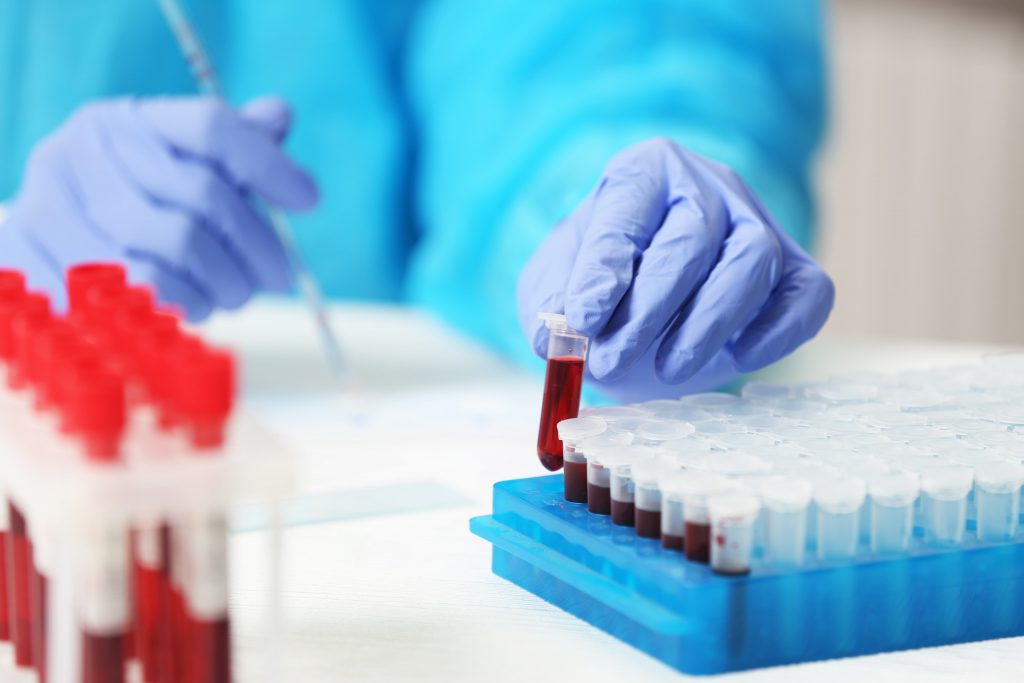
Blood samples for antibody testing may be taken from live deer or at slaughter. Two consecutive skin tests of the herd, completed at minimum intervals of 120 days with negative results, are required to lift movement restrictions. Skin and blood testing in this scenario is government funded.
Skin testing of captive deer
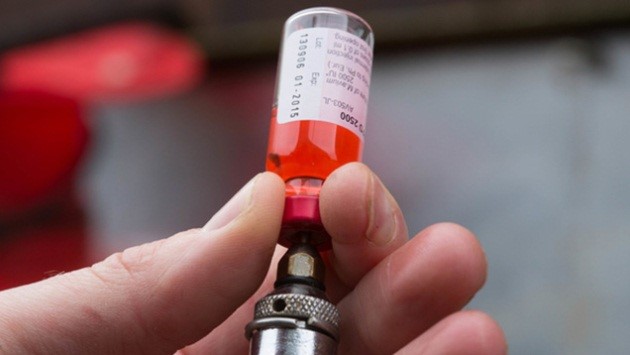
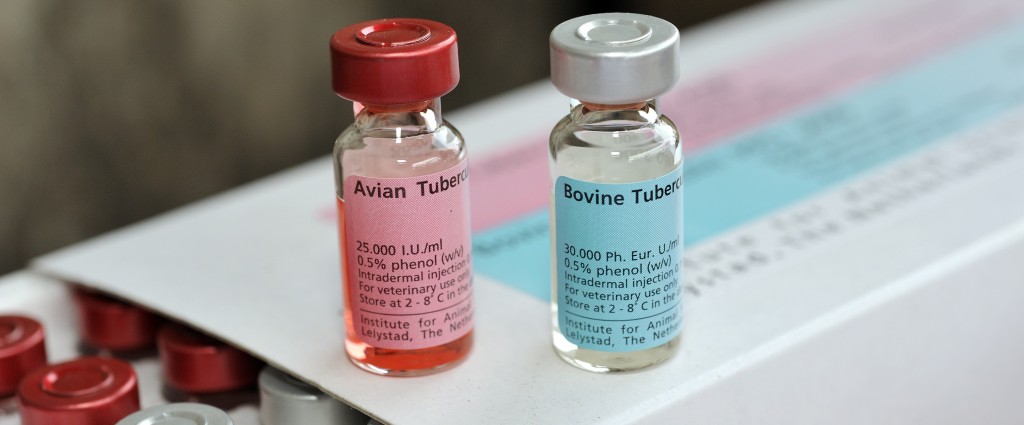
The tuberculin skin test is commonly used whenever TB screening of live captive deer is required. This involves a comparative test, injecting a small amount of avian and bovine tuberculin (a sterile, purified mixture of proteins extracted from cultures of M. bovis) into the deep layer of the skin in the middle of the neck. The skin is first clipped and the thickness of the skin fold measured in millimetres using special callipers before the tuberculin is injected. After 72 ± 4 hours, the vet returns and re-measures the skin at the site of the injections to determine if the animal is classified as a reactor, inconclusive reactor or negative (pass). The standard operating procedure for official veterinarians carrying out tuberculin skin testing of deer is available on the APHA Official Veterinarian Instructions.
Where skin testing is considered impractical or inappropriate, alternative surveillance methods to determine the TB status of a captive deer herd may be considered, such as surveillance through post-mortem examination at a slaughterhouse or during a routine seasonal cull. However, this will most likely significantly extend the time that the herd is under movement restrictions.
Captive deer contiguous to (or present on) premises that are affected by a TB breakdown in other species
APHA will normally require skin check testing of captive deer herds that live next to (or co-located on) premises affected by a lesion- or laboratory-confirmed TB breakdown in bovines (i.e. cattle, farmed water buffalo, or farmed bison), or M. bovis infection in other (non-bovine) livestock animals such as goats, camelids, pigs or sheep.
When cattle on a farm are under movement restrictions for a TB breakdown and APHA considers that there is a risk of infection spreading to other livestock on the same premises, a notice may also be served to contain other farm livestock, including captive deer. The notice may restrict livestock into a defined part of the premises, away from the cattle and prevent the movement of these animals to other holdings. In England and Scotland, APHA will not normally restrict the movements of such contiguous or co-located herds of captive deer unless justified by a veterinary risk assessment, e.g. when captive deer have been housed in close contact with infected cattle in a building with a shared airspace for a prolonged period, or when the required skin check test becomes overdue.
Tracings
APHA will consider, on a case-by-case basis, whether captive deer that may have been moved out of an infected herd to another herd before the application of TB movement restrictions may need to be traced and tested on their holding of destination at APHA’s expense. Source (back) tracing investigations and skin check testing of the herd(s) of origin of purchased TB-infected captive deer may also be undertaken.
Removal of TB test positive deer
In the event of positive skin and/or blood (antibody) test results, APHA will:
- arrange and meet the cost of haulage and slaughter of the test positive deer (reactors) and any direct contacts (DCs)
- arrange and meet the cost of post-mortem examination (PME) of the reactors and any DCs and laboratory testing (PCR or culture) of samples where appropriate
- allow private slaughter if the owner wishes (in this case the owner will meet the costs of haulage and slaughter).
Post-mortem images of TB in deer
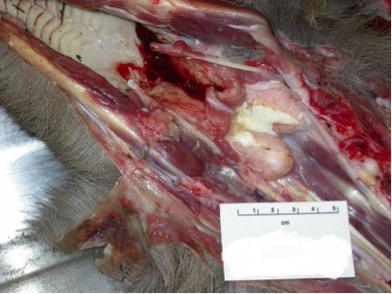
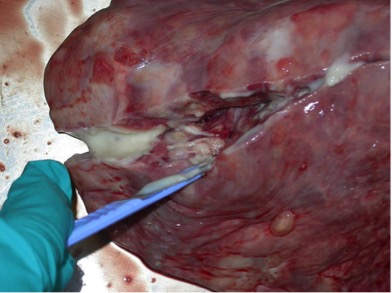
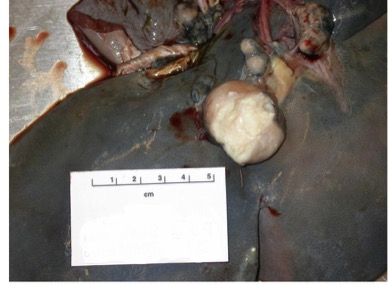
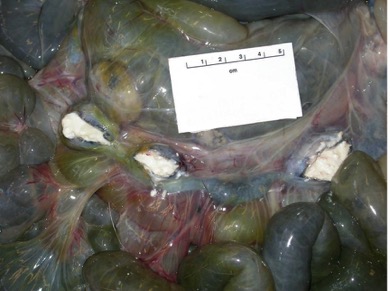
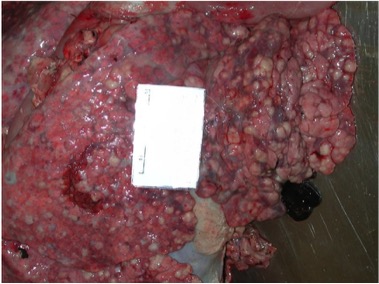
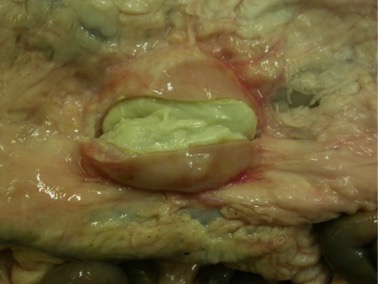
Lesions of TB in deer are primarily found in the lungs and lymph nodes of the head, thoracic cavity (chest), liver and abdomen. Lesions are white, cream or yellow in colour and may be calcified (gritty).
Compensation for compulsorily slaughtered captive deer
There is legal provision for the government to pay compensation to keepers for captive deer that are identified as TB reactors or DCs and require compulsory slaughter. Compensation rates are determined under the relevant domestic legislation for each country:
- In England, the Tuberculosis (Non-bovine animals) Slaughter and Compensation (England) Order 2017
- In Wales, the Tuberculosis (Wales) Order 2011
- In Scotland, the Tuberculosis in Specified Animals (Scotland) Order 2015.
In England and Scotland, statutory compensation payments for captive deer which are compulsorily slaughtered by APHA for TB control reasons are:
- £1500 for a working stag
- £400 for hind and young stock
In Wales, compensation for captive deer slaughtered due to TB is £400.
Keepers of captive deer in GB can arrange for private slaughter of the animals if they wish. In such cases, they will forgo the statutory compensation payments but will retain any salvage value of the carcases. Additionally, APHA will not accept responsibility if the carcase is condemned and will not pay compensation or any privately arranged haulage retrospectively.
Voluntary, privately funded TB testing of captive deer
Private TB testing of captive deer, for example as a pre-movement test prior to moving deer to a different geographical location, is considered good practice and is encouraged.
However, before such testing can take place, written permission must be obtained from APHA by submitting a TN184: Request to carry out TB testing of non-bovine species
Private TB testing of deer:
- Is carried out by a Private Veterinarian.
- Is funded by the deer keeper.
- Uses the tuberculin skin test and/or the antibody blood test.
Antibody Tests Available for Deer
APHA validated Antibody Tests
Three antibody tests have been fully validated by APHA and are available in its TB diagnostic laboratories for official and private use in deer. All three tests detect antibodies to M. bovis antigens.
The Dual Path Platform (DPP) VetTB test (Chembio Diagnostic Systems, Inc. USA) is based on the detection of antibodies using a set of recombinant (artificially manufactured) M. bovis antigens, MPB83 and ESAT6/CFP10, on two separate antigen lines of a lateral flow cassette.
The IDEXX ELISA test for bTB (IDEXX Laboratories Inc., USA) involves the detection of specific antibodies using a cocktail of M. bovis antigens (MPB83 and MPB70), and a simple ELISA (enzyme-linked immunosorbent assay) platform. The IDEXX ELISA was added to the World Organisation for Animal Health (WOAH) registry of tests for bTB in 2012.
The comparative PPD ELISA is a blood test that looks for antibodies to various antigens present in M. bovis PPDB but absent in M. avium PPDA. It compares the animal’s reaction to a bovine TB protein with its reaction to a similar protein from environmental bacteria. By comparing the two responses, the test helps identify antibodies that are more likely to be due to bovine TB infection rather than exposure to harmless environmental bacteria.
Additional TB antibody test not validated by APHA:
Enferplex TB testing
The Enferplex (multiplex) ELISA (Enfer Scientific) is based on the detection of antibodies against seven M. bovis antigens (MPB70, MPB70peptide, PPDB, ESAT6, CFP10, MPB83, Rv3616c) spotted separately on an ELISA platform. The Enferplex TB antibody test has not been fully validated by APHA for official use in deer in GB.
A study led by APHA in collaboration with Enfer Scientific in 2019-2021 and published in 2023 found no significant difference in diagnostic accuracy (sensitivity and specificity) between the three APHA-validated antibody tests for TB in deer and Enferplex test.
The meaning of test sensitivity and test specificity:
Sensitivity is the probability that a test will correctly identify an infected animal as positive.
Higher sensitivity reduces the likelihood of an infected animal being incorrectly classified as uninfected (a false negative result).
Specificity is the probability that a test will correctly identify an uninfected animal as negative.
Higher specificity reduces the likelihood of an uninfected animal being incorrectly classified as infected (a false positive result).
Table 1 – Single test sensitivity and specificity
|
Single Tests: |
TB-free deer |
TB-infected deer: with a prior skin test |
TB-infected deer: no prior skin test |
|||
|
|
% Specificity |
% Sensitivity |
% Sensitivity |
|||
|
|
% |
95% CI |
% |
95% CI |
% |
95% CI |
|
IDEXX ELISA |
98.8 |
97.2-99.6 |
76.6 |
65.6-85.5 |
55.2 |
45.2-65 |
|
DPP VetTB |
99.0 |
98.1-100 |
77.9 |
68.6-87.2 |
58.1 |
48.7-67.5 |
|
PPD ELISA |
98.8 |
97.2-99.6 |
79.2 |
68.5-87.6 |
51.4 |
41.5-61.3 |
|
Enferplex High Se |
99.0 |
98.1-100 |
85.7 |
77.9-93.5 |
56.2 |
46.7-66.7 |
|
Enferplex High Sp |
99.5 |
98.8-100 |
85.7 |
77.9-93.5 |
55.2 |
45.7-64.7 |
Improving Antibody Test Sensitivity
It is recommended that the Private Veterinarian administers an intradermal bovine tuberculin injection 10 to 30 days before blood sampling.
This may be:
- part of a preceding SICCT test, or
- a standalone bovine tuberculin injection given solely to boost antibody test sensitivity. In these cases, the skin test does not need to be read 72 hours later.
As demonstrated by the study (Table 1), in animals infected with M. bovis, a bovine tuberculin injection can boost pre-existing antibody levels, making them easier to detect and improving the sensitivity (by 24%) of subsequent antibody testing. This boosting effect does not occur in uninfected animals, as they do not have M. bovis-specific antibodies to stimulate.
If the deer keeper chooses not to undertake a skin test before blood sampling, they must accept a higher probability of false negative blood test results.
Use of Enferplex TB testing for deer
Although the Enferplex test has not undergone the internal APHA validation process for official use in deer in GB, the APHA – Enfer Scientific study mentioned above found that the test demonstrated sensitivity and specificity equivalent to the three APHA-validated TB antibody tests.
Therefore, private veterinary surgeons may also apply to APHA for permission to undertake privately funded Enferplex TB antibody testing of deer at SureFarm Ltd on behalf of their clients. They must do so by completing the TN184: Request to carry out TB testing of non-bovine species and submitting it to APHA.
Where the Enferplex test result is positive:
- The test-positive deer will normally be placed under movement restriction pending official re-testing by APHA.
- Official re-testing of Enferplex positive deer will involve a comparative tuberculin skin test followed by one of the three validated TB antibody tests available at APHA, all conducted at government expense
- Positive results to an official sample would result in further statutory actions, including removal (with payment of compensation) of the deer in question for post-mortem meat inspection, collection of tissue samples for bovis PCR testing, application of whole-herd restrictions and potential testing of the rest of the herd and/or trace testing.
As with any private TB antibody testing of deer carried out in an APHA laboratory, it is strongly recommended that the PVS collects the blood sample(s) for Enferplex testing 10-30 days after the administration of an intradermal tuberculin test or a bovine tuberculin injection.
Submitting sample for Antibody test
Approved applications for antibody test should be sent to:
- APHA Starcross using form TD27 if the deer keeper and their private veterinarian have chosen to use one of the APHA-validated antibody tests.
- SureFarm Ltd if the deer keeper and their private veterinarian have chosen to use the private Enferplex test.
Test Results and Movement Restrictions
Once the testing procedure has begun, the deer must not be moved until negative test results have been received.
, as they would with tuberculin skin test results. For antibody test conducted at APHA results are sent to both the keeper and the Private Veterinarian.
Free biosecurity advice for keepers of captive deer in England
The TB Advisory Service (TBAS) provides free, bespoke advice about practical, cost-effective measures to build herd/flock resilience to TB through on-farm advice visits and telephone advice. Keepers of farmed non-bovine animals across England are eligible for free advice from TBAS.
Keepers of captive deer can request a free one-to-one visit with an experienced veterinary advisor, who will provide bespoke recommendations to reduce the risk of TB infection for herds. Contact TBAS via email at info@tbas.org.uk or over the phone on 01306 779410 to book your free advice visit.

Useful resources
- Defra guidance on managing TB in non-bovine animals, including movement restrictions and compensation
- Guidance on managing TB in non-bovine animals in Wales and Scotland
- Defra routinely publish statistics on cases of TB in non-bovine species in Great Britain based on information collated by APHA
References
- Barton, P.; Robinson, N.; Middleton, S.; O’Brien, A.; Clarke, J.; Dominguez, M.; Gillgan, S.; Selmes, J.; Rhodes, S. Evaluation of Antibody Tests for Mycobacterium bovis Infection in Pigs and Deer. Vet. Sci. 2023, 10, 489. https://www.mdpi.com/2306-7381/10/8/489